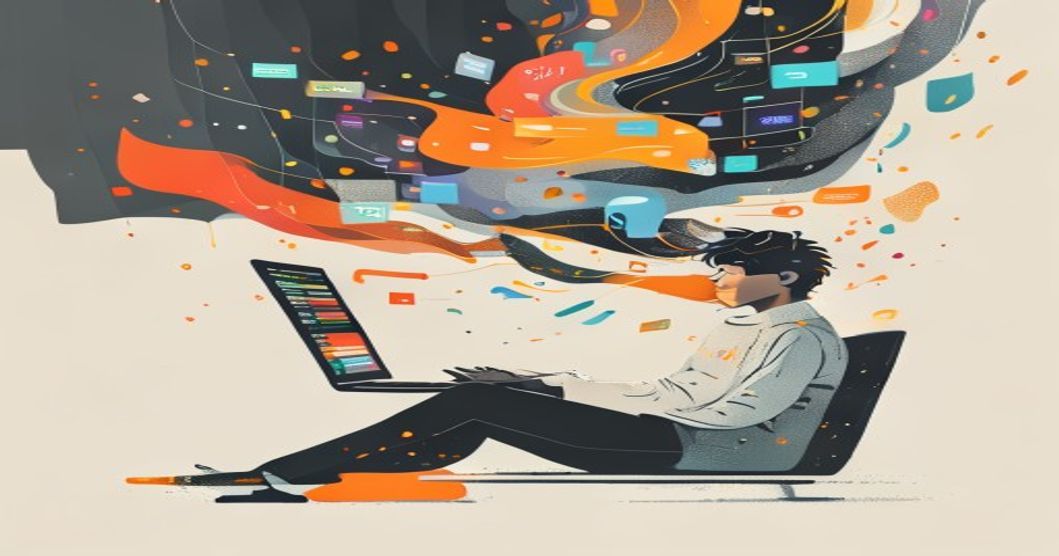
Somewhere right now, a founder with zero programming training is describing an app out loud. Twenty minutes later that app exists.
People call it vibe coding. You explain what you want in plain language, an AI writes the code, and you steer by reacting to results instead of studying syntax. Andrej Karpathy, a founding member of OpenAI, coined the term in early 2025, and the phrase escaped the lab instantly. By 2026 vibe coding drives a measurable share of new prototypes, weekend products and internal tools across the software world. Y Combinator reported in 2025 that a quarter of one recent startup batch built codebases that were almost entirely AI generated.
Magic? Not quite. A power tool with no blade guard? Closer. Here is the honest picture: what vibe coding is, where it shines, where it wounds and how professionals use it without regret.
What Is Vibe Coding: The Meaning in One Minute
Quick answer: Vibe coding means building software by describing what you want in plain language and letting an AI write the actual code. You steer by reacting to results instead of learning syntax. The term comes from AI researcher Andrej Karpathy and became the defining software trend of 2026.
Traditional development runs on precision. You learn a language, type exact instructions and the computer obeys or complains. Vibe coding flips the interface. You speak intent. The AI translates intent into code. You look at the result, describe what feels wrong and the loop repeats.
The name captures the mood: you ride the vibe of the conversation rather than the discipline of the syntax. Three ingredients make it work, and each one arrived recently:
- Models that write solid code. Modern AI models produce working code for most everyday requests on the first or second try.
- Tools that run the loop. Products such as Cursor, Replit, Claude Code and GitHub Copilot manage files, run tests and fix their own errors while you watch.
- Instant deployment. One command pushes the result to the internet, so the gap between idea and live product shrinks to an afternoon.
Where Does Vibe Coding Work Best
Used in the right lane, vibe coding is genuinely transformative. Three lanes stand out, and they cover most of the wins:
Prototypes and proof of concepts
An idea you can click beats an idea you can only pitch. Vibe coding turns a slide deck into a working demo before the meeting ends. Investors respond to products, not promises, and the cost of testing a hunch just fell to nearly zero.
Internal tools
Every company carries a backlog of small utilities nobody has time to build. A dashboard here. A report generator there. These tools serve ten users, not ten million, so polish matters less than existence. Vibe coding clears that backlog in days.
Learning and exploration
Beginners now learn by building real things instead of memorizing rules. Ask the AI why it wrote each line and you get a patient tutor fused with a fast pair of hands. The on-ramp to software creation has never been gentler.
What Are the Risks of Vibe Coding

Now the blade guard conversation. Speed without understanding accumulates invisible debt, and the bill arrives at the worst moment.
- Security holes. AI generated code can leak keys, skip input checks and expose databases. Researchers keep finding vibe coded apps with customer data readable by anyone who peeks. If nobody on the team reads the code, nobody catches the flaw.
- The complexity wall. Vibes carry a project to roughly the ninety percent mark with ease. The last stretch, where real products live, demands somebody who understands the machine underneath.
- Maintenance mystery. Six months later something breaks. Who fixes code nobody ever read? Rewrites get expensive precisely when the product starts to matter.
- Scaling surprises. Code that works for ten users can fall over at ten thousand. AI rarely volunteers that warning unprompted.
Vibe coding is a brilliant way to discover what you should build and a risky way to run what you have built.
How Do Professional Teams Use Vibe Coding Safely
Teams that get the best of both worlds follow four habits:
Prototype on vibes, ship on reviews
Move fast while exploring. Before real users and real data arrive, a qualified engineer reviews every line that touches money, identity or storage.
Keep secrets out of the code
API keys and passwords live in server configuration, never in generated files. This single rule prevents the most common vibe coding disaster.
Demand tests with every feature
Ask the AI to write tests alongside the code. Tests catch the quiet breakage that slips in when you regenerate a file and forget what the old version promised.
Know when to hand over
The moment a prototype earns paying users, treat it as production software. That means security audits, monitoring and an owner who understands the stack.
That handover moment is where we meet most of our clients. Cloudcoder takes vibe coded prototypes and hardens them into products that survive contact with the real world, a service that barely existed two years ago and now fills a growing slice of our AI development practice. Built something promising over a weekend? Show us. We will tell you honestly what it needs.
Questions People Ask
Can I build a real business on vibe coded software?
You can start one. Plenty of founders validate ideas and land early customers on AI generated code. Before serious scale or sensitive data, invest in a professional review, because the cost of a breach dwarfs the cost of an audit.
Will vibe coding replace software developers?
It changes the job rather than ending it. Routine code creation shifts to AI while developers move up a level: designing systems, reviewing output, securing data and owning quality. Demand for that judgment keeps rising.
Which tools should a beginner try first?
Replit offers the smoothest zero-setup start in the browser. Cursor suits people who want a real editor. Claude Code fits those who prefer working in a terminal with an agent that plans multi-step changes.
How do I know when my prototype needs professional help?
Three tripwires: you are about to accept payments, you are about to store personal data, or a bug now costs you customers. Any one of them means the vibes phase is over.